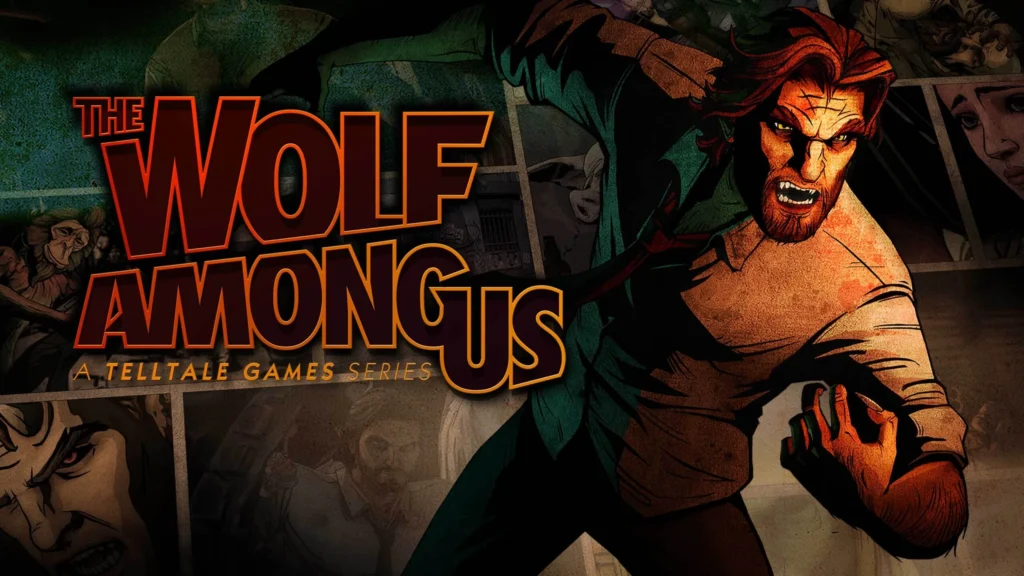
If you love playing mystery detective games, then we would definitely recommend you The Wolf Among Us in 2026, if you haven’t played it yet; here we take a look at five top reasons to play the game
Some games age. Others quietly become timeless.
The Wolf Among Us falls into the second category. Even more than a decade after its release, The Wolf Among Us in 2026 still feels fresh, gripping, and oddly unmatched in what it tries to do. While newer titles chase realism, scale, or complexity, this game does something far simpler and far more effective.
It tells a story that pulls you in and refuses to let go. Now that The Wolf Among Us 2 is confirmed to be in development and there is talk that it might even release in 2026, let us revisit the first game once more.
If you’ve never played it, or you’re considering revisiting it, or if you are someone who loves detective games, here are five strong reasons why The Wolf Among Us in 2026 is still worth your time.
1. A Unique Atmosphere That Still Stands Out
Most modern games chase realism. High-resolution textures, lifelike animations, and massive open worlds dominate the industry. But The Wolf Among Us in 2026 proves that story and style matter more than realism.
The game embraces a bold, comic-book-inspired art style, filled with neon lights, deep shadows, and a constant sense of unease. Every scene feels like it’s been pulled straight out of a graphic novel.
Rain-soaked streets, dimly lit apartments, and flickering signs create a noir world that feels alive without ever trying to mimic reality. It’s not trying to look real, it’s trying to feel real.
And it succeeds.
Even in 2026, very few Detective Games manage to create an atmosphere this strong. It doesn’t just look good, it is sets the tone for everything that follows.
2. Familiar Characters, Reimagined in a Darker World
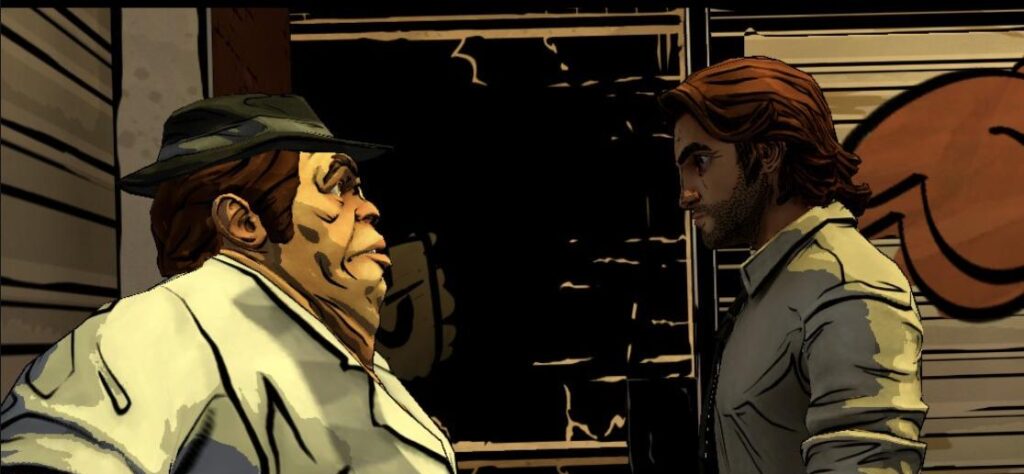
One of the most compelling aspects of The Wolf Among Us in 2026 is how it handles its characters.
These aren’t new creations. They’re figures you already recognize, Snow White, the Big Bad Wolf, Beauty, Beauty and the Beast, etc. but they are all twisted, aged, and reshaped into something far more complex.
Bigby Wolf isn’t just a fairy tale villain anymore. He’s now more of an anti-hero; a conflicted sheriff trying to maintain order in a broken system. Even Snow White isn’t a passive princess, she’s shown a sharp, politically powerful figure navigating a fragile society.
And this is why this reinterpretation adds immediate depth. You don’t need long introductions or explanations; you already know who they are. But at the same time, you also realize that you might not really know them at all. That contrast makes every interaction more engaging.
Among detective games, this approach is rare. Most games are known for building characters from scratch. Here, the game leverages familiarity and then subverts it.
3. Dialogue That Carries the Entire Experience
Let’s be honest, if you’re looking for traditional gameplay systems, The Wolf Among Us in 2026 doesn’t offer much.
There are no complex puzzles. No deep investigation mechanics. No intricate gameplay loops. And yet, it works. Because the dialogue and the characters do all the heavy lifting.
Every conversation feels tense. Every choice carries weight. And the timed responses force you to react, not overthink. You’re not just selecting dialogue, you’re deciding who Bigby is calm or aggressive, just or ruthless, or controlled or unpredictable like before.
The game proves something many developers still struggle to understand. Gameplay doesn’t always mean mechanics. Sometimes, it is also about giving meaningful decisions to a character.
Compared to other Detective Games, this is a very different approach. Instead of solving clues, you navigate people. And that’s where the tension comes from.
4. An Engaging Mystery, Even If It’s Not Perfect
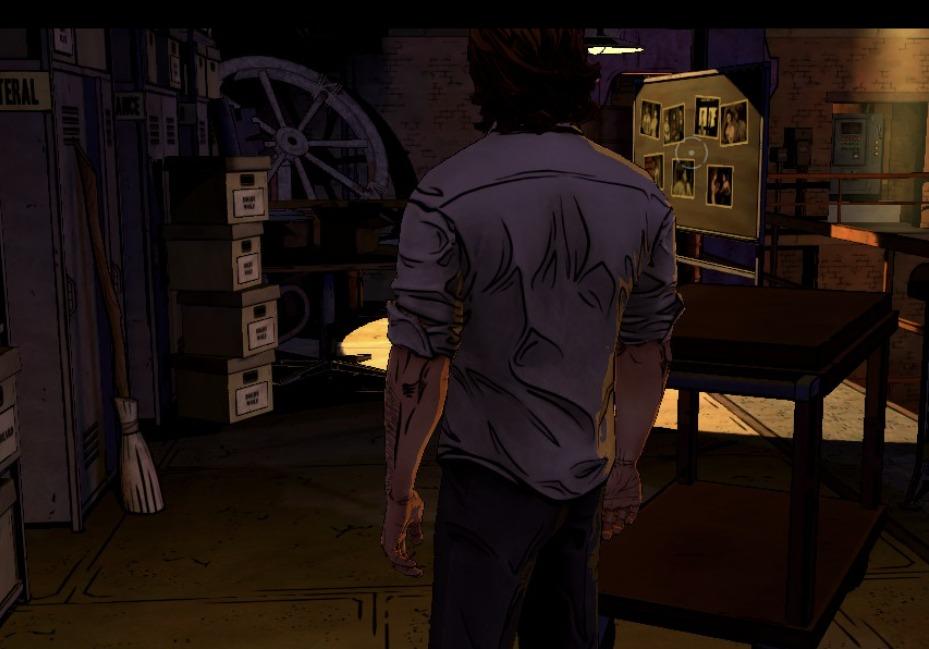
The Wolf Among Us in 2026 is still strong enough to keep you hooked from beginning to end.
The episodic structure helps a lot here. Each chapter ends with a cliffhanger that pushes you forward, making it hard to stop playing.
However, this is where The Wolf Among Us in 2026 might seem to be showing one of its few weaknesses. The identity of the main villain becomes somewhat predictable as the story progresses. It doesn’t deliver a shocking, mind-blowing twist in the traditional sense.
But here’s the important part. Predictable doesn’t necessarily mean boring.
The journey remains engaging because of the tight pacing and the compelling characters. Plus, your choices always shape how events unfold.
Among Detective Games, many rely heavily on clever twists. This game takes a different route; it focuses on immersion and emotional tension instead, why is why The Wolf Among Us in 2026 is still worth playing.
And in many ways, that works better.
5. An Ending That Stays With You
Most games aim for closure.
The Wolf Among Us in 2026 is still interesting because it does the opposite.
The ending doesn’t neatly wrap everything up. Instead, it introduces doubt. It raises few questions. It makes you rethink what you just experienced.
The ambiguity surrounding certain characters, especially the final moments, creates a lingering effect that very few games achieve.
You don’t just finish the game and move on. You think about it. You question it.
You replay scenes in your head.
This is where the game truly separates itself from other detective games. It’s not just about solving a case; it’s about understanding that some truths remain uncertain.
And that uncertainty is what makes the ending powerful.
The One Major Flaw You Should Know
No game is perfect, and The Wolf Among Us in 2026 does have a clear weakness.
For a game built around a detective premise, it lacks actual investigative gameplay.
You don’t piece together clues in a meaningful way, nor do you solve complex puzzles that make you think. There is no need to deduce outcomes through logic in the game.
Instead, the game guides you through the story, and majority of the game is about finding the evidence and necessary items in the particular locations, and choosing the dialogues while you are talking to characters.
You feel like a detective, but you rarely think like one. For players expecting traditional detective games like Sherlock Holmes, this can be disappointing.
However, if you approach it as a narrative-driven experience rather than a mechanics-heavy one, this flaw becomes easier to accept.
Final Verdict
So, is The Wolf Among Us in 2026 still worth playing?
Absolutely.
In an industry full of games trying to do everything at once, this one succeeds by focusing on what matters most.
If you haven’t played it yet, now is the perfect time, as there are discussions of the sequel releasing the following year.
And if you have, The Wolf Among Us in 2026 is one of those rare games that’s worth experiencing.