Although many players miss this, Lord Shimura is the real villain in Ghost of Tsushima! Here we discuss why in detail!
Released on July 17, 2020, Ghost of Tsushima is an open-world action-adventure game set during the first Mongol invasion of Japan in 1274., The game follows Jin Sakai, one of the last surviving samurai on Tsushima Island, as he struggles to repel the invading forces led by Khotun Khan.
While the game presents the Mongols as the obvious enemy, its emotional conflict revolves around Jin’s relationship with his uncle, Lord Shimura. By the end of the journey, it becomes clear that Lord Shimura is the real villain, not because he serves the Mongols, but because he repeatedly places a broken political system above the people he claims to protect.
1. Shimura’s Version of Honor Was Never About Saving Lives
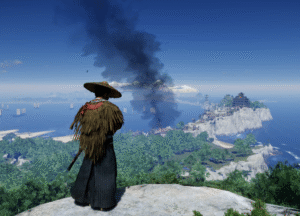
The biggest misconception in Ghost of Tsushima is that Lord Shimura represents genuine morality, honor and traditions. In reality, his definition of honor revolves around preserving the authority of the samurai class, even when it costs innocent lives.
Shimura constantly condemns Jin for using stealth, deception, and poison despite the overwhelming military advantage enjoyed by the Mongols. Every time Jin successfully weakens the invaders through unconventional tactics, Shimura responds with outrage rather than enthusiasm and gratitude.
This makes one thing painfully obvious: Lord Shimura is the real villain because his priorities are in the wrong places. Victory comes second. Protecting the image of the samurai comes first. For Shimura, a glorious defeat is preferable to a dishonorable victory, even if thousands of civilians pay the price.
2. He Saw the Ghost as a Political Threat Instead of Tsushima’s Savior
The Ghost did something that no one in the island expected. Jin proved that ordinary people could fight back against impossible odds without relying entirely on the samurai elite. Farmers, blacksmiths, thieves, monks, and survivors all became part of Tsushima’s resistance. That wasn’t simply a military problem for Shimura. It was a political nightmare.
The Ghost inspired hope among commoners while simultaneously proving that traditional samurai warfare was no longer the only path to victory. Once fear of the ruling class disappears, authority begins to crumble.
This is exactly why Lord Shimura is the real villain. Rather than embracing the tactics that were saving the innocent people in the island, he became obsessed with preserving a hierarchy that benefited the ruling class far more than the people dying beneath it. His enemy gradually became Jin instead of Khotun Khan.
3. Yuna Was Nothing More Than an Expendable Scapegoat
No character exposes Shimura’s hypocrisy better than Yuna. Despite relying on her knowledge, survival skills, and assistance throughout the campaign, Shimura never truly accepts her because she is a common thief. Once he learns that the Shogun is going to know about the Ghost’s methods, Shimura immediately searches for someone to blame.
His solution is brutally simple. Blame Yuna.
Instead of defending the woman who helped liberate Tsushima, he expects Jin to sacrifice her so the samurai leadership can distance itself from the poison attacks. Her life becomes a convenient political offering designed to protect the reputation of the ruling samurai class.
Once again, Lord Shimura is the real villain because his loyalty lies with appearances rather than justice. To him, Yuna’s execution is an acceptable price for preserving the honor of the samurai.
4. He Wanted Jin to Abandon Clan Sakai for His Own Legacy
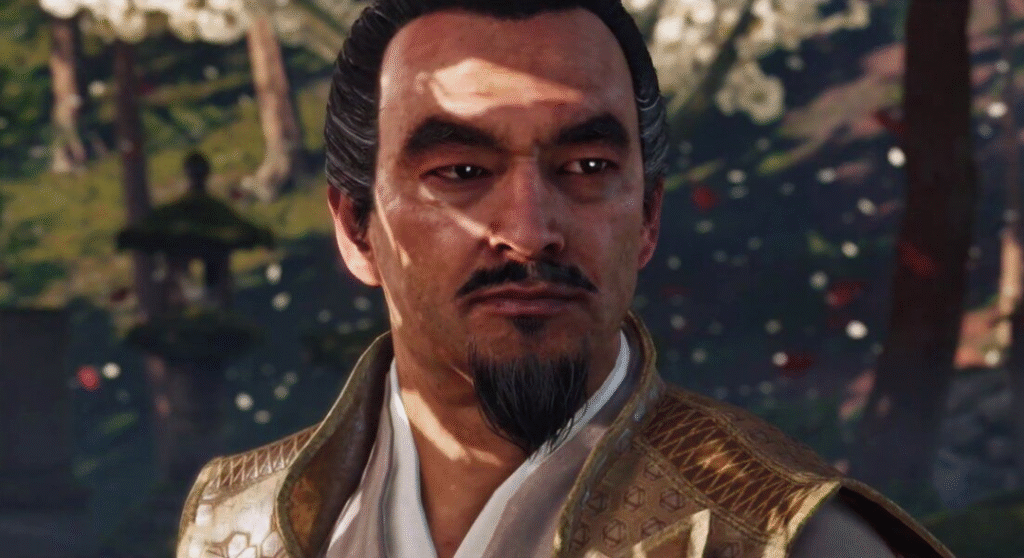
Shimura’s desire to adopt Jin is often portrayed as a touching father-son moment. It is anything but.
Adoption would erase the independent future of Clan Sakai by making Jin the heir of Clan Shimura instead. In a society where lineage, inheritance, and family legacy defined political power, this was far more than an emotional gesture.
Shimura expected Jin to abandon his father’s legacy in order to strengthen his own household. When Jin refuses because he is unwilling to become Yuna a scapegoat, Shimura’s affection suddenly has limits.Instead of respecting his nephew’s decision, he places his so-called duty above family, and puts Jin in prison.
This is another reason Lord Shimura is the real villain. His love for Jin exists only as long as Jin remains useful to the system Shimura serves. The moment Jin chooses conscience over obedience, Shimura chooses the state over his own family.
5. His “Honor” Meant Nothing During the Yarikawa Rebellion
Lord Shimura constantly lectures Jin about honor, yet his own history tells a different story. Years before the Mongol invasion, Yarikawa rebelled against the Shogunate. Shimura, alongside other samurai clans, brutally crushed the uprising. Even years later, the people of Yarikawa still despise Clan Shimura and Clan Sakai, showing just how deep the scars of that campaign remain. So where was Shimura’s honor then?
Apparently, honor wasn’t an obstacle when the enemy consisted of fellow Japanese challenging the Shogunate. It only became sacred when Jin used unconventional tactics to save Tsushima from a brutal foreign invasion.
That contradiction exposes Shimura’s greatest hypocrisy. His version of honor was never a universal moral code; it was a tool used to defend the samurai hierarchy whenever its authority was threatened. Once you recognize that, it becomes much easier to see why Lord Shimura is the real villain in Ghost of Tsushima.
6. He Was Willing to Sacrifice His Own Soldiers Instead of Changing His Strategy
We perfectly see at the Battle of Castle how Shimura himself exposes the fatal flaw in his leadership. After the samurai successfully pushed the Mongols back, Khotun Khan’s men destroyed the bridge leading to the inner keep, which had killed countless warriors in the explosion. Rather than adapting to the situation, Shimura planned to rebuild the bridge and launch another frontal assault at dawn, despite knowing it would send even more of his own men into a heavily fortified killing zone.
Jin immediately recognized this reality of the battlefield. Repairing the bridge under enemy fire would cost countless lives before the samurai even reached the castle walls. Instead, he infiltrated the keep alone and poisoned the Mongol army, allowing Castle Shimura to be retaken without sacrificing another wave of soldiers.
Shimura, however, was horrified; not because his men had died, but because Jin had violated the samurai code. That reaction says everything. Faced with a choice between preserving lives or preserving tradition, Shimura chose tradition. It is difficult to call that honorable. A true leader values the lives of his soldiers above customs, outdated or not. Shimura was willing to spend those lives to protect an ideal, making the argument that Lord Shimura is the real villain even stronger.
7. He Was Even Willing to Kill the Man Who Saved Tsushima
Perhaps the greatest indictment of Shimura’s character comes after the Mongols have already been defeated.
Jin rescues Shimura from captivity, reunites the island’s fractured clans, inspires ordinary people to resist the invasion, defeats Ryuzo, kills Khotun Khan, and ultimately saves Tsushima from getting captured by the Mongols. Without Jin abandoning the traditional samurai code, none of those victories would have been possible.
Yet none of that mattered to Shimura. He did not even allow the Ghost to be a temporary solution against the Mongols. When the Shogun declared the Ghost a threat to the authority of the samurai, Shimura accepted the order to execute Jin without hesitation. He disbanded Clan Sakai, abandoned his dream of adopting Jin, and at the end of the game, we see him challenging Jin, the protector of Tsushima, his own nephew to a duel to the death.
This wasn’t a battle against a traitor. It was a battle against the very man who had accomplished what every samurai on the island had failed to do. Shimura knew Jin had saved countless lives, including his own, but he still chose loyalty to the Shogun over loyalty to his family.
That final confrontation reveals Shimura’s true priorities. His devotion was never to justice, compassion, or even the people of Tsushima. It was to the political system he had sworn to uphold. This is why he can choose his loyalty to the Shogunate over his nephew any day!
Conclusion
Lord Shimura wasn’t simply an outdated samurai struggling to adapt to changing times. He consistently chose political authority, tradition, and the samurai hierarchy over the lives of his people and even his own family.
History has repeatedly shown that guerrilla warfare is not inherently dishonorable; great leaders like Chatrapati Shivaji Maharaj, who had built the Maratha Empire in India, used it to fight against the Mughals as they were stronger and larger in number. while earning lasting respect for himself. Shimura’s real flaw wasn’t just not seeing the importance of guerilla warfare at such a crucial time, nor his commitment to honor, but his willingness to hide behind it whenever power was at stake. That is why Lord Shimura is the real villain in Ghost of Tsushima, if we look deeply into the story.
Read our full review of Ghost of Tsushima’s and why its Storytelling Feels Untouchable
Also check out some of the best cinematic horror games that you can play