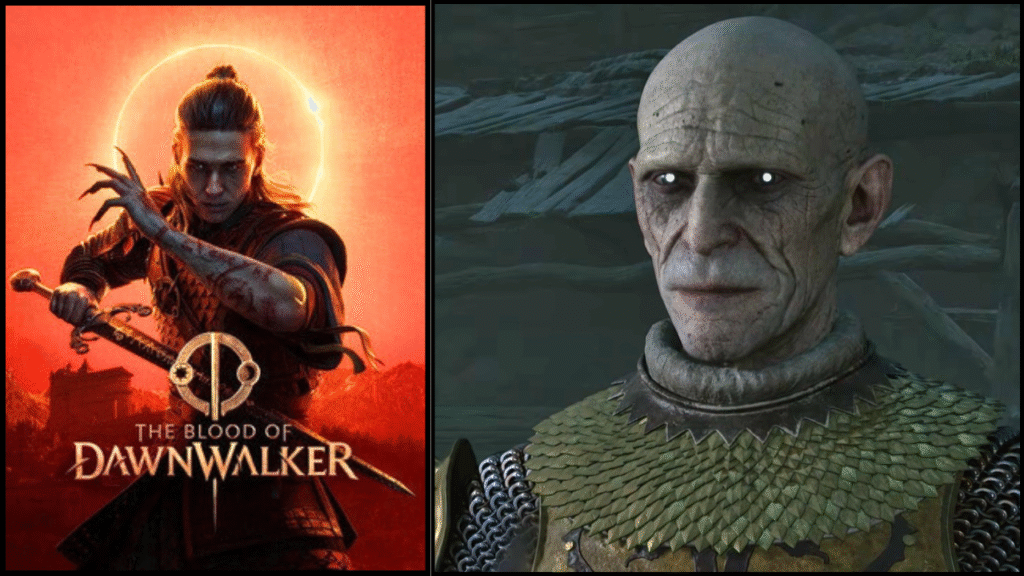
The Blood of Dawnwalker delivers meaningful choices, a compelling story, and unmatched player freedom, but technical issues and uneven combat hold it back. Read our review to know to know if the game is worth your time. (Minor Spoilers)
Developed by Rebel Wolves, a studio founded by former CD Projekt Red veterans, and published by Bandai Namco Entertainment, The Blood of Dawnwalker launched on September 3, 2026 for PC, PlayStation 5, and Xbox Series X/S. Set in the vampire-ruled valley of Vale Sangora, the game follows Coen, a man caught between humanity and vampirism as he races against time to save his family from the powerful vampire lord Brencis, who has been ruling the valley for two years or so.
From the moment it was announced, comparisons to The Witcher 3 were inevitable. Between the dark fantasy setting, morally gray choices, and the involvement of former Witcher developers, the similarities are obvious. Yet Dawnwalker manages to carve out its own identity thanks to two brilliant ideas: its half-human half-vampire protagonist, and giving players complete control over how much of the game they want to or (do not want) to experience.
The Blood of Dawnwalker is not a perfect RPG. It suffers from optimization problems, an uneven combat system, and a world that feels smaller than it should. But despite its flaws, it is one of the most memorable RPGs released in recent years. If you are a gamer who loves RPGs that focus on narrative, then this game is definitely for you.
Story – 7.5/10
The story in The Blood of Dawnwalker is undoubtedly one of the game’s biggest strengths. While it never reaches the heights of masterpieces like The Witcher 3, it remains compelling from beginning to end. Coen’s mission to save his family provides a strong emotional foundation, and the game does an excellent job of making players care about Coen as well as the outcome.
The narrative is also strengthened by its branching structure. Major decisions can dramatically alter the course of the story, encouraging multiple playthroughs. The game’s willingness to commit to its consequences is refreshing in an era where many RPG choices ultimately lead to the same destination. The game literally players attack and eliminate anyone in Coen’s vampire form, and if they do, key NPCs can disappear entirely from the story! This is the level of freedom the game gives you. However, despite this, I feel the game lacks as much as replay value as The Witcher 3.
Characters – 9/10
Ironically, the weakest major character may be the protagonist himself. Coen often feels generic and lacks the strong personality seen in many modern gaming heroes. He functions more as a vessel for player choice than as a memorable character in his own right.
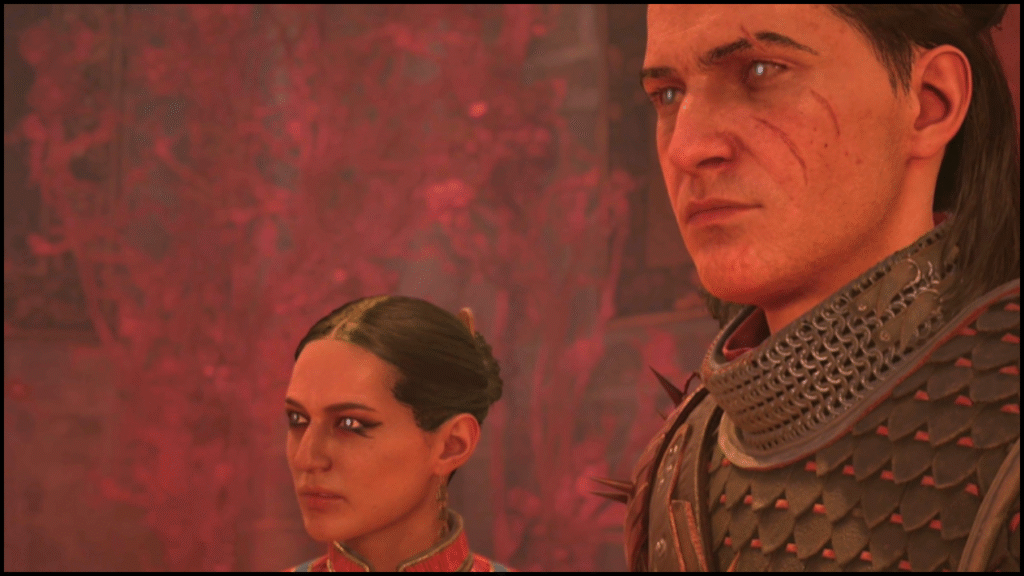
The supporting cast, however, is excellent.Brencis is easily one of the most fascinating antagonists in recent RPGs. Throughout the game, players are repeatedly forced to ask themselves whether he is truly a villain. After all, he saved the valley from plague, restored order, and replaced corrupt rulers. His methods are often brutal, but his motivations are understandable.
This moral ambiguity elevates the entire narrative. Even the supporting characters such as Crake and Anca are not entirely perfect and have their own flaws. Plus, the villains are definitely memorable. The best villains are not the ones players hate. They are the ones who make players question whether they should oppose them at all.
Gameplay – 10/10
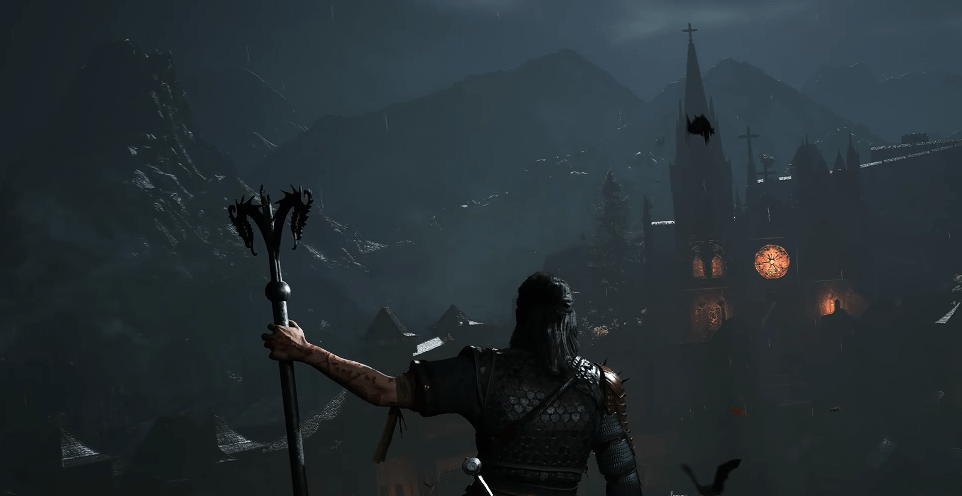
This is where The Blood of Dawnwalker truly shines. Unlike many RPGs and open world games, the game never forces players into endless grinding or repetitive side content. Yes, few quests might feel repetitive, but they are entirely optional. The amount of time you spend in Vale Sangora is entirely up to you.
Want to explore every questline and uncover every secret possible? You can easily spend 30 to 40 hours here. Want to focus primarily on the main story? You can finish the game in 10 to 15 hours. In fact, if you are skilled enough, you can even finish the game right after the prologue by defeating the main character, though doing so is extremely hard and not recommended.
In addition, the game even supports highly unconventional routes that can dramatically shorten the experience. This freedom is almost unheard of in modern RPGs.
The day-and-night system is equally impressive. By day, Coen is human. By night, he gains access to vampire powers and entirely different gameplay opportunities. This mechanic is not a gimmick. It influences exploration, combat, quest design, and decision-making throughout the game.
Then there is the controversial 30-day timer. Many players feel they dislike the idea, but it turned out to be one of my favorite features. Thirty days is far more generous than it appears, and even if players fail to save their family in time, the game adapts rather than ending abruptly. The story evolves from a rescue mission into a revenge mission. That flexibility is a testament to Dawnwalker’s design philosophy.
Combat – 7/10
Like most players, I have mixed feeling regarding the combat. The opening hours can be frustrating as players learn the directional combat system, parrying mechanics, and stamina management. Once everything clicks, however, combat becomes genuinely enjoyable.
The progression system also feels rewarding. By the end of the game, Coen becomes significantly powerful, unlocking powerful abilities and acquiring legendary gear that transforms encounters. Unfortunately, the balance may eventually swing too far in the player’s favor, and you might feel overpowered, unless you are playing in the hardest mode.
With the right equipment and upgrades, players can become absurdly powerful. This creates a strange situation where mid-game bosses such as Bakir feel more challenging than the final confrontation with Brencis itself.
The targeting system is another issue. The lack of a proper lock-on feature during combat makes fights against multiple enemies unnecessarily messy, and escaping random encounters in the map can often be frustrating.
Visuals & Atmosphere – 8.5/10
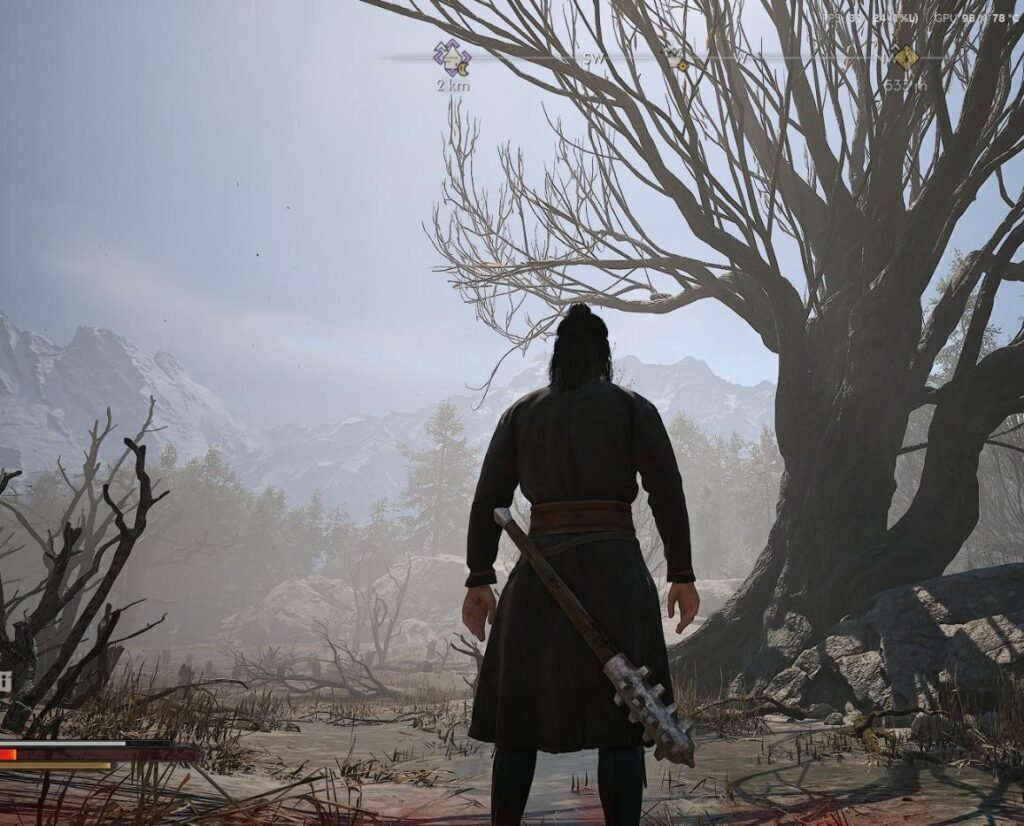
The atmosphere is outstanding. The Blood of Dawnwalker captures the same dark fantasy energy that made The Witcher 3 so memorable. The gloomy villages, oppressive forests, ruined castles, and constant sense of dread create a world that feels authentically ruled by vampire tyrants.
The game does an excellent job of making players feel like they are living under tyranny. Every village, every frightened peasant, and every encounter with the Boyars reinforces that central theme.
The visual design supports this atmosphere beautifully. While the game does not push graphical boundaries, its art direction is consistently strong. However, the world itself feels smaller than the atmosphere suggests.
There is only one major city, and most villages are relatively small. Large portions of the map feel underutilized, which is why the map feels mostly empty. This prevents the setting from reaching the same level as some of the best in the industry.
Music – 7/10
The soundtrack effectively supports the game’s atmosphere but rarely stands out on its own.
The music fits the world well and helps establish mood, but repetition becomes noticeable over time, especially during the combat sequences. Few tracks remain memorable long after the credits roll.
UI & Quality of Life – 8/10
The Blood of Dawnwalker deserves praise for respecting the player’s time. The menus are clean and easy to navigate, and the game allows unlimited manual saves. In a game filled with meaningful choices and multiple endings, this is a massive quality-of-life advantage. Today, we’ve seen that most AAA games give us only a limited number of save slots, which is definitely frustrating.
The map, however, has few problems. Navigation occasionally feels clunky, and some control limitations make moving around the map more tiresome than it should be.
Performance & Optimization – 6/10
This is arguably the game’s weakest area.
While patches have improved stability, performance issues remain a common complaint among players. Stuttering, inconsistent frame pacing, and occasional technical problems prevent the game from feeling as polished as its AAA competitors. Several reviews and community discussions have echoed these concerns.
The game is absolutely playable, but optimization is clearly an area where Rebel Wolves still has work to do.
Final Verdict – 8 out of 10
Personally, it might stand as among the top five games I have played. But critically speaking, The Blood of Dawnwalker is not the most polished RPG of the decade.
Its protagonist is somewhat generic. Its combat can be frustrating at times. Its world feels smaller than it should. And its technical shortcomings are impossible to ignore. Yet none of those flaws overshadow what the game accomplishes.
Very few RPGs trust players as much as Dawnwalker does. The freedom to shape your journey, the meaningful consequences of your choices, the excellent supporting characters, the unique day-and-night mechanics, and the brilliant 30-day structure combine to create something genuinely special.
It may not be a masterpiece, but it is exactly the kind of ambitious RPG the genre needs more of. If you are looking for a dark fantasy RPG like Witcher 3, The Blood of Dawnwalker is the perfect choice.
Therefore, my rating for the game is 8 out of 10 stars.
Read our list of 7 vampire games where you play as a vampire.
Check out the ten most underrated psychological horror games you can play.