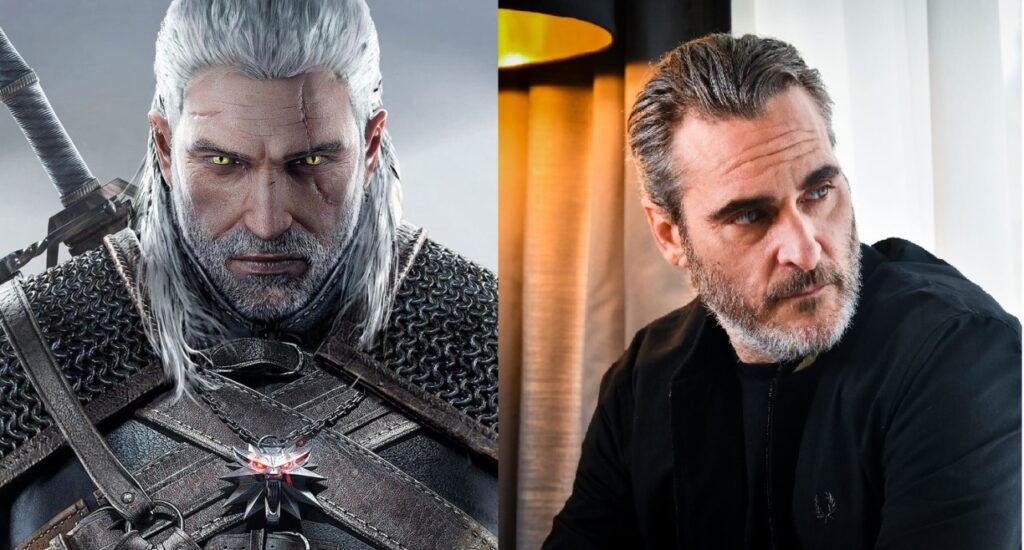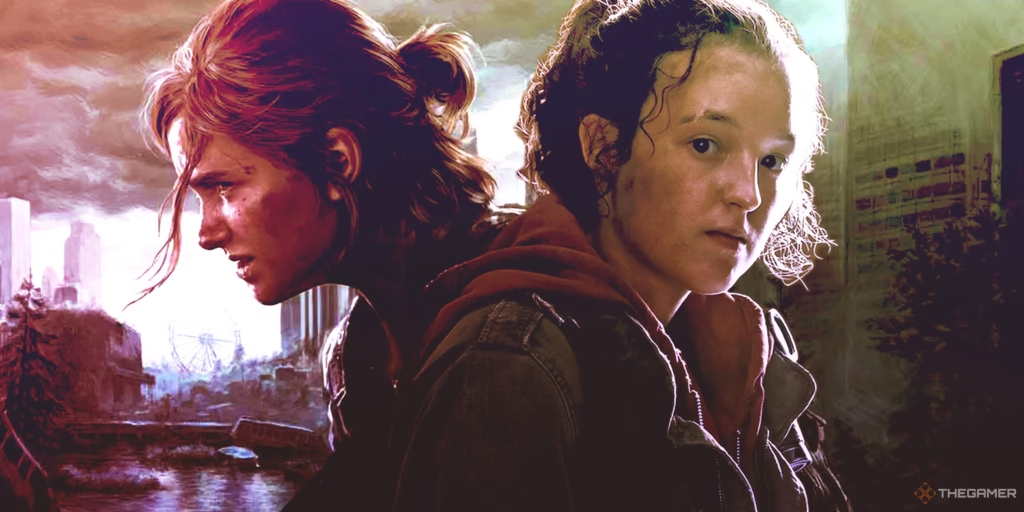
The Witcher Season 4 isn’t just disappointing; many fans consider it a betrayal. Here are three reasons why fans believe Netflix turned a dark masterpiece franchise into hollow fantasy fanfic.
The Witcher used to be one of Netflix’s biggest hits. After the success of The Witcher 3 in 2015, the series debuted in 2019, though it was based on Andrzej Sapkowski’s legendary fantasy novels rather than the game. Soon, the series became a success and quickly became a global phenomenon. The show is produced by Lauren Schmidt Hissrich, who also serves as showrunner. The first season mostly received positive reviews, but as the show continued, fans noticed that the quality had started to deteriorate, despite the brilliant performance of Henry Cavill as Geralt of Rivia. Season 2 drew criticism for messy writing and pacing, while Season 3 confused viewers with scattered storytelling. Season 4, released in October 2025, was supposed to continue the saga after Geralt’s near-fatal injuries in Season 3. Instead, it left the fanbase furious and divided. Here, we are going to discuss why The Witcher Season 4 has become a disaster.
1. Henry Cavill Is Gone, and Liam Hemsworth Just Doesn’t Fit – At All!
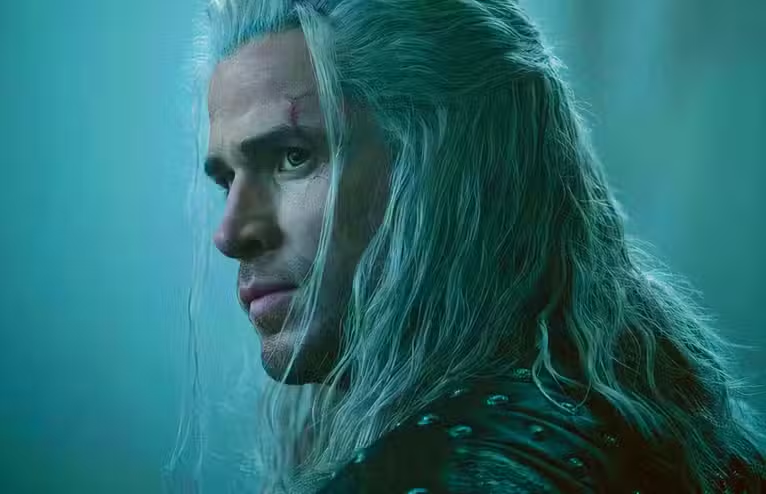
Let’s start with the obvious. Henry Cavill wasn’t just an actor playing Geralt. He was the embodiment of the character. Cavill brought quiet strength, subtle emotion, and an obsessive love for Sapkowski’s world. As someone who loved both the games and the books, Henry Cavill understood Geralt’s internal struggle between humanity and detachment. Every grunt, every tired stare, every clipped line carried meaning.
When Cavill left after Season 3, fans were heartbroken but willing to give Liam Hemsworth a chance. Then the teaser dropped, and we all heard it- Liam yelling, “Let’s f***ing move!” as Geralt. It sounded wrong instantly. Geralt never talks like that. He is a stoic monster hunter, not a motivational army leader. That one line told everyone that this was no longer the same Witcher.
Liam Hemsworth is not a bad actor at all, but he feels out of place. He looks too polished, his expressions lack the weary depth Cavill brought, and the new dialogue does him no favors. The writers made Geralt in The Witcher Season 4 talk too much and stripped away the quiet mystery that defined him. It feels like watching someone play a version of Geralt for a stage play. This is why many fans believe that Liam’s Geralt look completely soulless.
Even fans who wanted to support Liam admit that the fault lies deeper than him. With Cavill gone, there is no one left to protect the integrity of the source material. He used to push back against poor writing choices. Now the writing feels lazy, and Geralt’s personality has been rewritten into something generic. The result is a hollow imitation of what once was the soul of the show.
2. The Main Trio Feels Like They’re in Three Different Shows
One of the greatest strengths of The Witcher was always the emotional bond between Geralt, Yennefer, and Ciri. They were never a typical family, but their growing connection made the world feel alive. In The Witcher Season 4, that bond completely collapses. The three leads spend almost the entire season apart, and their storylines barely connect in any meaningful way.
Geralt is off wandering through new territories, battling random monsters that add little to the main plot. These side adventures feel like filler, not character development. He fights, grunts, and moves on, but there is no emotional core anymore.
Yennefer, meanwhile, is stuck in endless mage politics. Her plotline revolves around council meetings, power plays, and long conversations that lead nowhere. She used to be one of the most compelling characters in fantasy television. Now she feels like a background character in her own story.
Ciri’s arc could have been the best of the three. Her descent into the darker persona of Falka had real potential. But the execution is scattered and inconsistent. The show jumps in and out of her story so abruptly that it’s hard to stay invested. Fans wanted to see her transformation unfold naturally, but it feels rushed and disconnected.
When the trio finally reunites, it doesn’t feel earned. There is no emotional payoff in The Witcher Season 4, no buildup, no sense of relief. The chemistry that made the first two seasons so strong has completely disappeared. It feels like three separate TV shows edited together by force. The writing fails to weave their stories into a cohesive whole, and that breaks the heart of what The Witcher used to be.
3. It Completely Abandoned the Books and Turned Into Fanfic

Fans have complained since Season 2 that the show strays too far from Andrzej Sapkowski’s novels. The Witcher Season 4 finally crossed the line. It no longer feels like an adaptation at all.
Sapkowski’s world is full of irony, tragedy, and moral questions. The monsters are metaphors for human cruelty, and every choice has consequences. The books are not about chosen heroes or easy answers. They are about flawed people trying to survive in a broken world.
Season 4 ignores that completely. The tone has changed from dark and philosophical to loud and flashy. The writing feels like fanfiction written by someone who just read the Wikipedia page about the franchise. The characters have lost their complexity. Geralt has become talkative and impulsive. Yennefer’s strength feels replaced with generic leadership speeches. Ciri’s fall into darkness, one of the most powerful arcs in the novels, is turned into a shallow revenge story.
Even the world itself feels different. The lighting is brighter, the visuals are cleaner, and the sense of grime and realism is gone. The political intrigue feels staged. The danger feels artificial. The show now exists to set up spin-offs rather than to tell a coherent story.
What makes this even more frustrating is how showrunner Lauren Schmidt Hissrich defends these changes in an interview. Instead of acknowledging that the show has drifted too far from Sapkowski’s tone, she says, “The books still exist. No one is taking the books or the games away. I think everyone can have their version of The Witcher, and this is this version.” That single line tells fans everything they feared: the team no longer sees The Witcher as an adaptation. They see it as a playground for their own version of the story. This single statement can be seen as Lauren’s polite way of saying, “We’ll do whatever we want with it. We don’t care what the original Witcher fans say or think”
To the people who love the books and games, that statement feels like confirmation that the show has become a high-budget fanfic,especially in The Witcher Season 4. It explains why the tone, the writing, and the characters feel so far removed from the world Sapkowski built.
It is frustrating because The Witcher used to stand out for being different. It was dark, slow, and strange in a good way. Now it feels like every other fantasy show that tries to be epic without understanding its own soul. Fans wanted adaptation. What they got instead is a fantasy remix with no respect for its roots.
The Fallout
The reaction from fans has been brutal. On Reddit, review sites, and YouTube, Season 4 is getting ripped apart. Even people who defended the earlier seasons now seem to have had enough. The consensus is clear: The Witcher has lost its soul.
For a series that once balanced monster-hunting, political intrigue, and genuine heart, this fall from grace feels tragic. The magic that once made The Witcher stand apart has vanished, leaving behind something hollow and confused. At this point, true fans see only two choices: either Netflix reboots the show and restores its loyalty to Sapkowski’s world, or it is better to end it completely and let the story rest in peace.
Check out 5 differences between video game Geralt and Netflix’s Geralt that can’t be ignored
Also check out 5 actors who would be perfect for Geralt of Rivia…