
Reanimal review: A darker evolution from the original creators of Little Nightmares 1 and 2, Reanimal blends eerie atmosphere with expanded 3D gameplay, and survival elements into one of the most ambitious indie horror games of the year.
Released on 13th February 2026, Reanimal is the latest project from the studio that originally gave us Little Nightmares, but this is not a spiritual sequel and it should never be treated like one. From the very first hour, Reanimal makes it clear that it wants to stand on its own as one of the boldest indie horror games in recent years. This Reanimal review will make one thing clear: the game is enjoyable, darker, more grounded, and far more ambitious than many expected. While critics have largely praised Reanimal for its atmosphere and evolution, the real surprise is how much it expands beyond the side-scrolling formula that defined its past. Let us analyze in detail to see if this game is worth playing for you or not!
Reanimal Is Not an Extension of Little Nightmares
One of the biggest mistakes players can make is approaching Reanimal as if it is simply Little Nightmares in a new coat of paint or with different characters. It is not. The shift in tone alone proves that. The earlier games had a slightly cartoonish horror aesthetic. Reanimal removes much of that stylized charm and replaces it with something heavier and more oppressive.
This darker identity is one reason critics have grouped Reanimal among the stronger atmospheric horror games of the year. The environments feel bleak rather than whimsical. The horror is less about grotesque exaggeration and more about tension, silence, and unease. Among modern horror games, that tonal maturity helps Reanimal stand apart.
At the same time, the game still carries that unsettling DNA that fans of indie horror games appreciate. The world design, creature presence, and slow-burn pacing make it clear that the studio understands how to build discomfort without relying on constant jump scares.
A Massive Gameplay Evolution
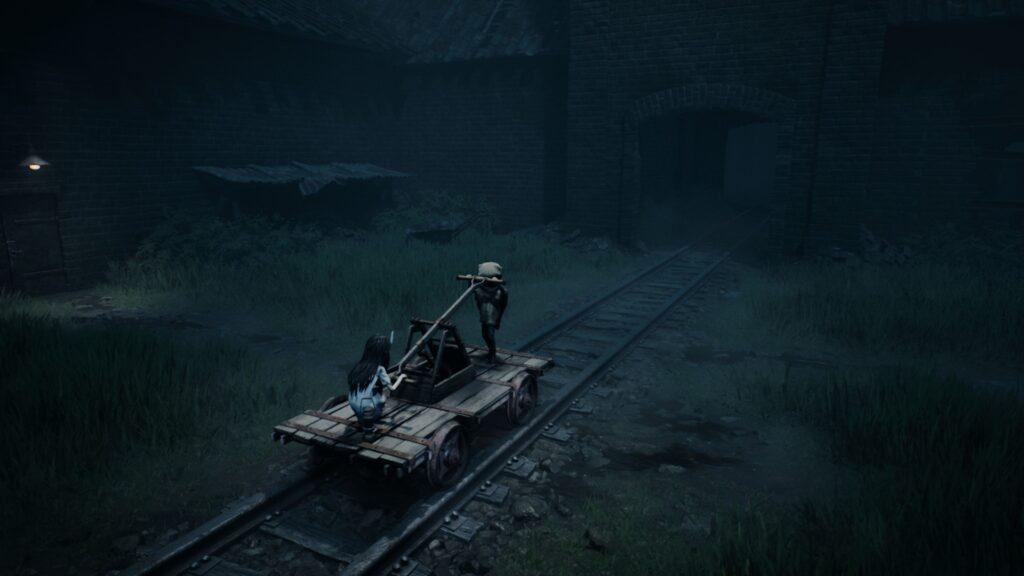
The most obvious evolution in Reanimal is structural. It is no longer confined to side-scrolling platforming. The world opens up into fully 3D environments, and the scope expands dramatically.
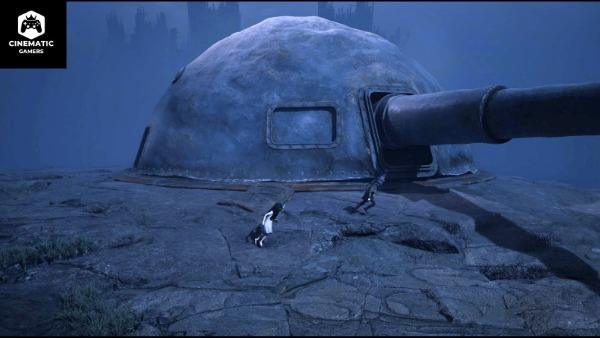
You can wield rifles. You can drive trains. You can operate trucks and boats. And in the final chapter, you even control a freaking tank! That alone signals how far Reanimal has moved from its roots. If you are among those players who were worried this would be a safe repetition of past ideas, don’t be as this evolution is reassuring!
Critics have also highlighted this shift as one of the strongest aspects of Reanimal. You might even be surprised that the studio successfully carried forward its eerie design philosophy while expanding the gameplay systems. Among indie games, that kind of ambition is not always common.
This is where Reanimal truly separates itself within indie horror games. It feels bigger. Not bloated. Not artificially stretched. Just expanded in scope. However, to be honest, I did feel bored during certain parts of the game that seemed way longer than it should have been. However, this is a personal experience which can differ from player to player.
Length and Pacing: Longer Than It Looks?
At first glance, Reanimal feels like it might be a 4 to 6 hour experience. That assumption is misleading.
Because of its puzzle design and survival elements, the game stretches much longer than expected. In my case, Reanimal took around 20 hours to complete. That is significantly longer than typical atmospheric horror games in this category.
It is important to clarify something here. The game is not brutally difficult. The puzzles are not designed to punish you. Instead, what they actually do is slow you down. They force you to think, observe, and survive carefully. This pacing naturally extends playtime, unless you are a pro in these kind of games.
Some critics have described the gameplay as simple in places. And that is partially true. Reanimal is not mechanically complex in the way some larger horror games are. But the simplicity works in its favor. It maintains immersion instead of overwhelming the player with systems.
For indie horror games especially, restraint can be a strength. Reanimal understands that balance.
Not Extremely Scary, But Consistently Eerie
If you are looking for relentless terror, Reanimal may not fully satisfy that expectation. It is not the scariest entry among recent horror games. It rarely relies on aggressive jump scares. In fact, I don’t even remember it having any such cheap jump scare.
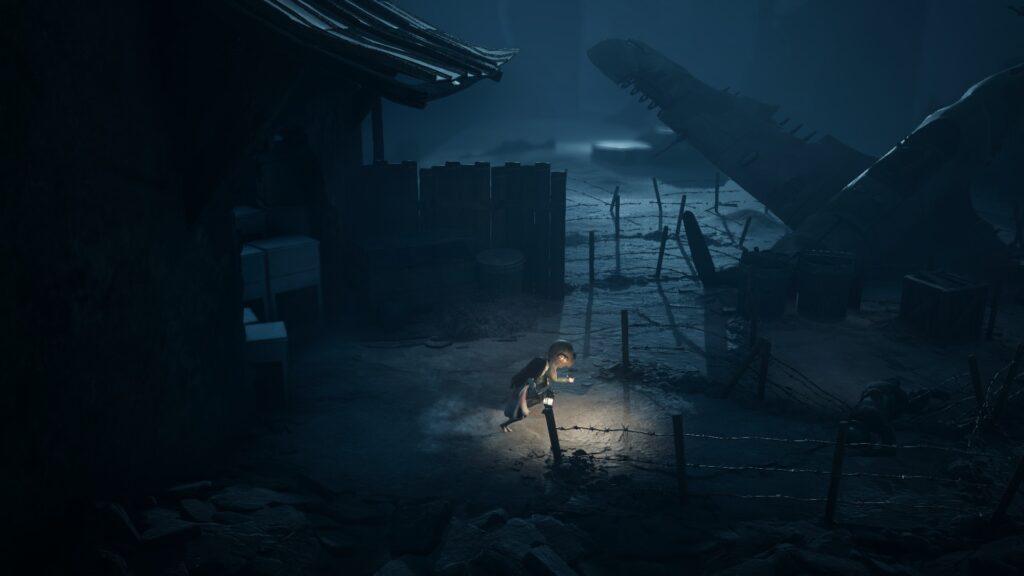
However, what it delivers is something arguably more valuable. A sustained eerie feeling. The atmosphere is heavy. The sound design keeps you alert. The environments feel unsafe even when nothing is actively attacking you. That slow tension is what defines the best atmospheric horror games, and Reanimal fits comfortably in that category.
This is another area where critical reception aligns closely with personal experience. Many outlets have praised the oppressive mood and unsettling world design. While some reviewers wished for deeper gameplay complexity, very few questioned the strength of the atmosphere.
Among indie horror games released recently, Reanimal’s tone is one of its strongest achievements.
Accessibility and Difficulty- Is it too much of a headache?
Reanimal is not overly difficult. That is a positive.
It does not trap players behind unfair mechanics. Checkpoints are plenty. Encounters are manageable. The survival elements create tension without too much frustration. However, that does not mean it is possible to complete the game without dying even once, unless of course, you are extremely skilled. At certain points, the game does get a bit tricky or difficult, and might need several trial and error to continue.
In a genre where some horror games confuse difficulty with fear, Reanimal avoids that trap. It allows players to experience its world without constant punishment.
That design choice makes it more accessible within indie games and broadens its appeal beyond hardcore horror audiences.
Are Critics Right?
Critics have generally responded positively to Reanimal. It holds strong review averages and has been recommended by a large majority of outlets. Praise has focused on its atmosphere, tonal maturity, and successful evolution from previous design constraints. Some critics have also noted that the game is not for children, as it can get quite disturbing at times.
Some criticism exists around puzzle simplicity and occasional gameplay repetition. Those concerns are valid to a degree. Reanimal does not reinvent horror games entirely. But it does refine what it chooses to focus on.
When viewed within the landscape of indie horror games and atmospheric horror games, Reanimal earns its place near the top tier of recent releases.
Is it better than Little Nightmares 3?
Yes, overall, Reanimal provides a more satisfying experience. When comparing the two purely as complete packages, Reanimal feels more ambitious, more evolved, and more confident in its direction. The expanded 3D design, vehicle sequences, survival elements, and darker tone give it a broader and more memorable scope than many recent indie horror games. It simply feels like a bigger step forward for atmospheric horror games as a whole.
However, it is important to be fair. Little Nightmares 3 has far more in common with Little Nightmares 1 and Little Nightmares 2 in terms of structure and tone, even though it comes from a different studio. It preserves the side-scrolling identity, the stylized horror aesthetic, and the familiar formula that fans of those earlier horror games expect. Reanimal, on the other hand, intentionally breaks away from that framework.
Make sure to read our review of Little Nightmares 3 as well…
Final Verdict: Should you play it
Reanimal is an evolution, not an extension. It should never be played as “Little Nightmares but bigger.” It has grown beyond that framework.
It is darker. It is more grounded. It is more ambitious in scope.
It may not be the scariest among modern horror games, but it delivers a consistent eerie tone that defines strong atmospheric horror games. Its expanded mechanics, vehicle sequences, and survival pacing show meaningful growth for the studio.
In this Reanimal review, my conclusion is simple. Reanimal is an enjoyable, ambitious entry among indie horror games that proves evolution does not require abandoning identity. It respects its roots while confidently stepping into something larger.
For fans of indie games that value atmosphere over cheap thrills, Reanimal is absolutely worth experiencing.
Score: 8/10



Pingback: Little Nightmares 3 Review: A Familiar Nightmare but is it Worth Entering? - Cinematic Gamers
Pingback: The 7 Upcoming Horror Games in 2026 Horror Fans Are Excited About ! - Cinematic Gamers